


Complete Guide to Joint Pain: Symptoms, Causes, and Medical Treatments
By Dr. Asif Islam, Consultant Rheumatologist, Ali Fatima Hospital, Lahore
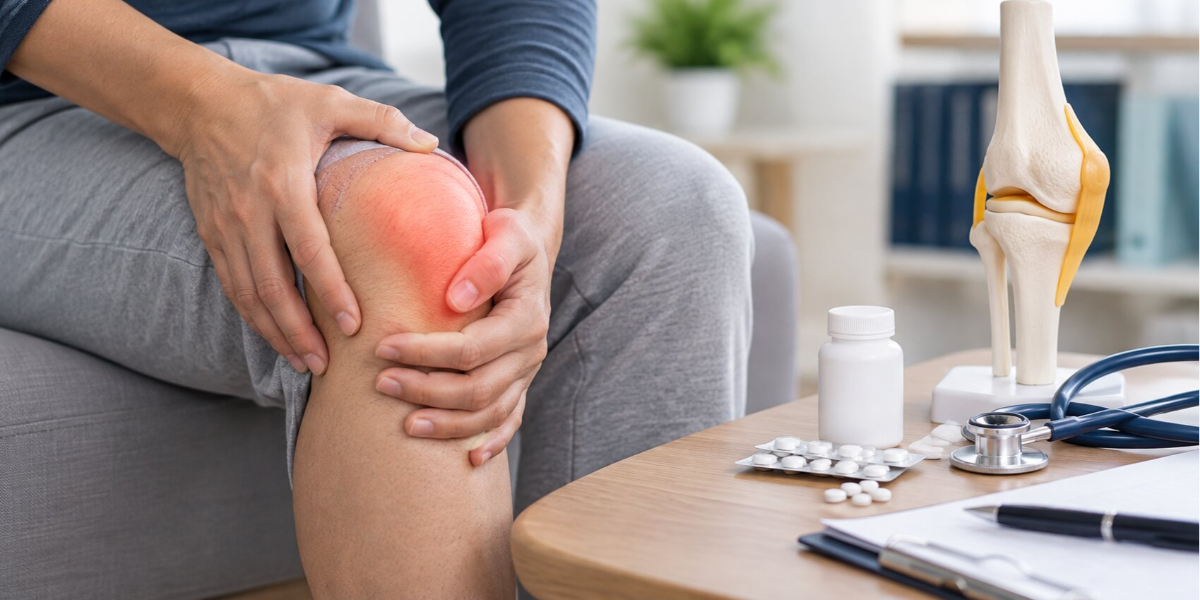
I've been treating joint pain for a long time now, and if there's one thing I hear in my clinic every single day, it's some version of this: "Doctor, I don't know why my knees hurt, I just take a painkiller and move on." Let me walk you through this the way I actually would with a patient , what you're feeling, why it's happening, and what genuinely helps.
Joint Pain Symptoms
Before we get into causes, your own symptoms are already telling you something, if you know how to read them.
Pain that's worse in the morning and loosens up after 20-30 minutes of moving usually points toward inflammation, like rheumatoid arthritis. Pain that's the opposite , fine in the morning, worse by evening after activity , is more of an osteoarthritis, wear-and-tear pattern.
Swelling matters too. A joint that's visibly puffy, warm, maybe a little red, means active inflammation, and that changes how quickly I want to see you. Stiffness gets underplayed a lot , patients say "it's a bit tight" when it's actually taking 45 minutes to loosen up every morning, which is a number I genuinely need to know.
Some people get a grinding or clicking feeling, especially in the knees , usually cartilage-related. Others notice pain that jumps around, one week the wrist, next week the ankle. And occasionally there's fatigue or mild fever alongside the joint pain, which tells me to look beyond "just achy knees."
Joint Pain Causes
Once I know your symptoms, the next question is always: what's actually behind them? And honestly, there isn't one answer , joint pain is a symptom, not a diagnosis in itself.
Most of the time, especially past 40 or so, it's plain wear and tear. The cartilage that cushions your joints thins out over the years, faster if you've carried extra weight, worked a physically hard job, or just got unlucky with genetics. That's osteoarthritis , the most common thing I see, by far.
Then there's a completely different category , your own immune system attacking your joints. That's rheumatoid arthritis, and I've seen it in patients as young as their late 20s. It's not an "old person's disease" the way people assume.
Gout is its own thing entirely , uric acid building up and forming crystal deposits, usually striking the big toe suddenly and violently, often overnight. Beyond these three, there's a longer list , old injuries, tendinitis, bursitis, infections in the joint, even an underactive thyroid can show up as joint aches. Lupus and psoriatic arthritis can present as joint pain first too.
A few things also push your odds up generally , age, family history, extra body weight (especially hard on knees and hips), old injuries that "healed fine" but never fully did, and jobs involving repetitive strain like kneeling or heavy lifting. None of this guarantees a problem, but it's why I pay closer attention when patients with these factors mention aches.
Joint Pain Treatment
Once we know what's likely going on, treatment starts with a proper diagnosis, not a tablet.
I'll ask how long it's been going on, whether it's one joint or many, whether there's swelling, whether it's worse in the morning or after activity. Depending on what I suspect, I might order blood work , inflammatory markers, uric acid, rheumatoid factor , or imaging like an X-ray or ultrasound.
The plan then depends entirely on the cause. For osteoarthritis, it's usually physiotherapy, weight management, and pain control during flares. We manage it, we don't cure it, because cartilage doesn't grow back.
For rheumatoid arthritis, we try to get ahead of the disease early, because joint damage happens quietly even when the pain feels manageable , that's the part patients find hardest to believe. For gout, treatment isn't really about the joint at all; it's about lowering uric acid so crystals stop forming in the first place.
Joint Pain Medicine
I'll be direct here because patients deserve honesty over a sales pitch.
For mild, short-term pain , you overdid it at the gym, or you were on your feet all day , an ordinary anti-inflammatory or paracetamol for a couple of days is perfectly reasonable. That's what they're for.
For autoimmune cases, we use medicine that works on the immune system itself , DMARDs, and in tougher cases, biologic therapies. These need proper prescribing and blood monitoring along the way, not something to self-select at a pharmacy. Corticosteroid injections directly into a joint are another option for a bad flare, but again, that's a clinic decision, not a home one.
Joint Pain Tablets
Here's the part I really want you to take away from this article.
What worries me isn't a tablet taken once or twice , it's when a patient tells me they've been reaching for one every few days for two months straight. That's not a medicine problem anymore. That's your body telling you something, and the tablet is just turning the volume down on the message.
I've had patients arrive years later with joint damage that could have been slowed significantly if we'd caught the cause earlier instead of repeatedly treating the symptom.
My rule of thumb: tablets are fine for a few days. If you're still reaching for them weeks later, that's not the tablet's job anymore , that's a diagnosis I need to make, not a stronger dose you need to find.
Everyday Prevention
A few habits genuinely make a difference long-term. Keep moving rather than resting joints out of caution , the muscles around a joint act as its support structure. Watch your weight, especially for knees and hips; I've had patients lose five or six kilos and tell me their knee pain visibly eased.
Don't ignore an injury just because the swelling went down , half-healed ligaments are exactly what leads to arthritis in that same joint years later. And if your job involves repetitive strain on one joint, small changes , posture, support braces, regular breaks , add up over years.
When to Call the Doctor
I hope this has helped you understand your joint pain a little better , where it might be coming from, and what's worth trying at home. But reading about it only goes so far.
If the pain keeps coming back, isn't settling with rest and simple care, or is starting to bother you more than it used to, it's probably time to have it looked at properly rather than living with the uncertainty.
If you're nearby and would like an actual opinion rather than more guesswork, I'm at Ali Fatima Hospital in Lahore, and you can visit Dr. Asif Islam's profile for his clinic timings and details.
Frequently Asked Questions
What causes knee joint pain?
Most of the time in my clinic, it's osteoarthritis, an old ligament or meniscus injury, or inflammation around the tendons. Gout and rheumatoid arthritis show up in the knee occasionally too. If a knee is swollen, hot, or you can't bear weight on it, that's not one of the "wait it out" causes , come in.
What's the best medicine for joint pain in Pakistan?
I get asked this constantly, and my answer is always the same, even though I know it's not the quick answer people want: it depends entirely on what's actually wrong. A basic anti-inflammatory or paracetamol from any pharmacy covers mild pain fine. But if I gave every patient the same tablet regardless of cause, half of them with autoimmune arthritis would be walking around with worsening joint damage while feeling like the pain is "managed." The right medicine only exists after the right diagnosis.
When should you worry about joint pain?
See a doctor without waiting if you notice swelling, redness, or warmth around the joint; fever alongside the pain; morning stiffness lasting more than 30 minutes; pain that wakes you up at night; or pain that jumps between different joints. These aren't "tough it out" symptoms , they respond far better to early treatment than to a few more weeks of home remedies.
How do you relieve joint pain?
Movement, honestly, helps more than rest , total rest tends to stiffen joints further rather than protect them. Hot or cold packs ease pain during a flare. If you're carrying extra weight, even a modest loss takes real pressure off the knees and hips. Once acute pain settles, low-impact exercise , walking, swimming, cycling , keeps the joint strong without grinding on it further.
What vitamins help with joint pain?
A bit, yes, but they're supportive, not a fix. Vitamin D and calcium matter for bone health, and low vitamin D correlates with more aches in my patients. Omega-3s seem to calm inflammation somewhat, particularly in rheumatoid patients. Vitamin C supports the collagen cartilage that needs to be repaired. But if someone's taking fish oil instead of coming in for a proper diagnosis, that's backwards, fix the cause first.
Share on Social Media
Recommended For You










Readers Also Viewed These Articles
Categories
- Medicine
- Surgery Department
- Emergency Care
- Anaesthesia
- Cardiology and Cardiac Catheterization
- Dentistry
- ENT (Ear, Nose & Throat)
- Health
- Surgery
- Departments
Get in touch with us today to get medical services
Ali Fatima Hospital
Bhobtian Avenue, 9 Km Raiwind Rd, Lahore
- EMAIL US: info@afh.org.pk
- CALL US: 042-35459806
Subscribe Our Newsletter
Copyright 2026. All Rights Reserved By AFH